A Georgian Ancestor at the Center of a Famous Family
I keep coming back to Littleberry Walker Carter because his life feels like a hinge in a larger story. He was not a president, not a headline figure, and not a man surrounded by marble or monuments. Yet he stood in the middle of a family line that reached forward into one of the best known American political families of the 20th century. His name carries the texture of old Georgia: fields, war, kinship, grief, and survival.
Records place Littleberry Walker Carter in Georgia, usually in Warren County, with his birth year given as either 1829 or 1832. That small gap matters less than the shape of the life itself. He grew up inside a rural Southern world where family lines were deep, land mattered, and reputation moved like weather across generations. His father was Wiley Carter Sr., a farmer and planter with real standing in the region. His mother was Ann Ansley, sometimes spelled Ann Ainsley in family trees. Together they created a large household with many children, and Littleberry was one of them.
To me, the family feels like a wide river. Wiley and Ann were the headwaters, and Littleberry was one of the strongest branches carrying the current forward.
The Carter Household That Shaped Him
Littleberry was from a large family. The Carters had many siblings, which matters since family size in the 1800s was not simply about love. Labor, survival, inheritance, and identity. Anne Ansley, Armanda, Caroline, Calvin G., Euphrasia A., Littleberry Walker, Jane, Julia, Louisiana Virginia, Wiley Jr., Ann W., and Jesse Taliaferro are related to Wiley Carter Sr. Sterling, another child in some family trees, tells me that old documents change shape like fog.
Ann Ansley, Abel Ansley, and Lydia Harrison Morris are his maternal ancestors. Behind them are Job Morris and Mary Ansley. It may look dry on paper, but that web of names is family architecture. It shows that Littleberry was not created overnight. He has American ancestry from Georgia and beyond.
I think that’s essential since people generally condense ancestors into birth or death dates. Littleberry deserves more. His familial system shaped everything afterward.
Marriage, Children, and a House Full of Continuity
On 5 January 1851, Littleberry married Mary Ann Diligent Seals, sometimes written Seales. That marriage tied him to another Georgia family, and it appears to have anchored much of his adult life. Mary Ann’s parents were William A. Seals and Eliza Harris. The marriage produced children, and through those children the Carter name continued its long walk through history.
The children most clearly associated with Littleberry are Jeremiah Calvin Carter, Annie Eliza Ray or Eliza Ann Carter, William Archibald Carter, and Nannie Bell Carter. The names vary a little across records, which is common in family history, but the people themselves remain part of the same living chain.
William Archibald Carter matters especially because he connects Littleberry to the later Carter line that led to James Earl Carter Sr. and then to Jimmy Carter. That makes Littleberry not just a father and husband, but a bridge. He is one of those ancestors whose significance grows larger the farther you look forward in time.
When I read these family names together, I do not see a simple list. I see a house with many rooms. I see children growing into adults, marriages linking one clan to another, and the slow multiplication of descendants. The family tree becomes less like a chart and more like a living canopy, with Littleberry beneath it and also inside it.
War, Service, and the Weight of the Civil War Years
Littleberry’s adult life was marked by the Civil War, which cut through Southern families like a blade through cloth. He served as an artilleryman in the Confederate army, reportedly with Captain A. S. Cutts’s company, known as the Sumter Flying Artillery. Jimmy Carter later wrote that Littleberry and two of his brothers served in artillery and fought in 21 battles. That number is striking. It suggests not a brief enlistment, but a grinding stretch of violence and fear.
I think about what that meant for a man born into a rural Georgia family. The war would have brought instability to everything he knew. Fields were disrupted. Labor was lost. Families were divided. Homes became temporary shelters against history. Littleberry’s military service places him in the hard center of that era, where ordinary men were asked to carry extraordinary burdens.
The war did not end the story. It only changed the terrain.
Farming, Property, and the Hard Shape of Postwar Life
After the war, Littleberry appears to have returned to farming. He bought and worked land west of Americus, and that farm later became the site of Souther Field, now linked to Jimmy Carter Regional Airport. That detail is vivid to me because it ties an old agrarian life to a modern place with engines, runways, and movement. A field once worked by hand later became a place where aircraft rose into the air. Time has a taste for irony.
His financial life seems modest rather than wealthy. One family narrative says he died leaving seven bushels of groundnuts in his estate. That detail feels earthy and almost unbearably human. It tells me he was not leaving behind a vault of riches. He was leaving behind the remains of a working farm, the kind of wealth that can be touched, counted, and eaten.
I picture a man whose life was measured in harvests, not headlines. A man whose prosperity depended on weather, labor, and the stubborn rhythm of seasons. That kind of life does not always leave dramatic records, but it leaves a durable imprint.
The Line Toward Jimmy Carter
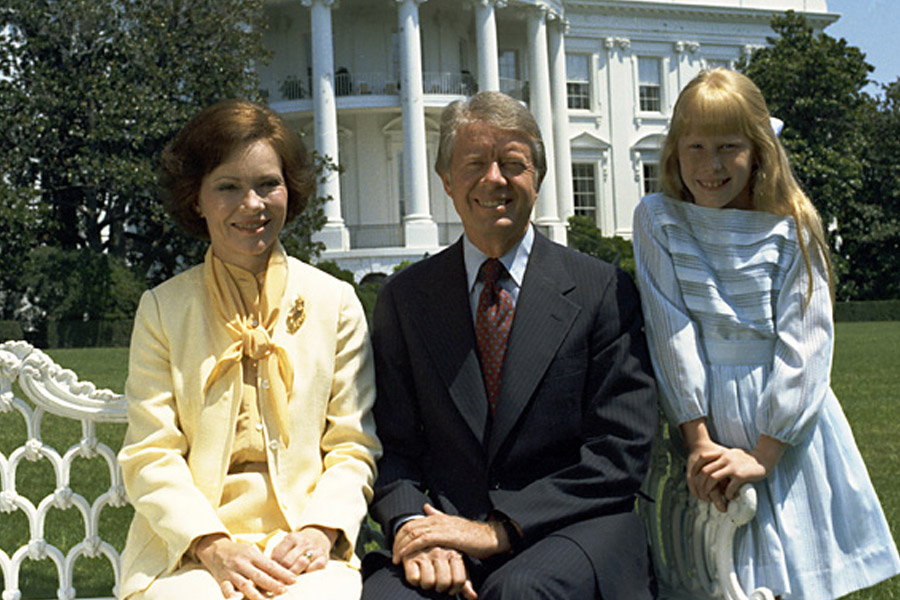
One reason Littleberry’s name important is where his family went. Jimmy Carter, Billy Carter, Ruth Carter Stapleton, Gloria Carter Spann, and others were the children of William Archibald Carter’s son James Earl Carter Sr. That sequence makes Littleberry Jimmy Carter’s great-grandfather and the ancestor of a White House-bound family.
James Earl Carter Sr. worked and influenced locally. An insurance broker, farmer, fertilizer salesman, Baptist, Democrat, WWI veteran, and Georgia legislator. Those facts demonstrate how the Carter family moved between public and private life in Southern Georgia, molded by employment. I think Littleberry’s deep roots fed that latter tree.
A family story explains how memory travels. The greater shape remains obvious despite modest name changes, date shifts, and record conflicts. Littleberry is near the start of the Carter family’s rise from farming to national power.
Family Members at a Glance
Littleberry Walker Carter sat at the center of several linked generations. His father was Wiley Carter Sr. His mother was Ann Ansley. His wife was Mary Ann Diligent Seals. His children included Jeremiah Calvin Carter, Annie Eliza Ray or Eliza Ann Carter, William Archibald Carter, and Nannie Bell Carter. Through William Archibald came James Earl Carter Sr., and through him came Jimmy Carter, Billy Carter, Ruth Carter Stapleton, and Gloria Carter Spann.
That list can feel clinical if read quickly, but I do not read it that way. I read it like a family chorus. Each name is a voice. Each generation carries a note from the one before it.
FAQ
Who was Littleberry Walker Carter?
Littleberry Walker Carter was a 19th century Georgia farmer and Confederate artilleryman whose family line connects directly to the Carter family of President Jimmy Carter. He lived a rural Southern life shaped by land, war, marriage, and children.
Who were his parents?
His parents were Wiley Carter Sr. and Ann Ansley. Wiley was a substantial farmer and planter, while Ann came from the Ansley and Morris family lines that were also tied into the broader Georgia family network.
Who was his wife?
His wife was Mary Ann Diligent Seals, also written as Seales in some records. They married on 5 January 1851 in Warren County, Georgia.
What children did he have?
The children most clearly linked to him are Jeremiah Calvin Carter, Annie Eliza Ray or Eliza Ann Carter, William Archibald Carter, and Nannie Bell Carter. William Archibald Carter is the key line of descent leading to James Earl Carter Sr. and Jimmy Carter.
Why is he historically important?
He is important because he sits near the start of the Carter family line that later produced Jimmy Carter. He also represents the world of rural Georgia during and after the Civil War, a world shaped by farming, military service, and family continuity.