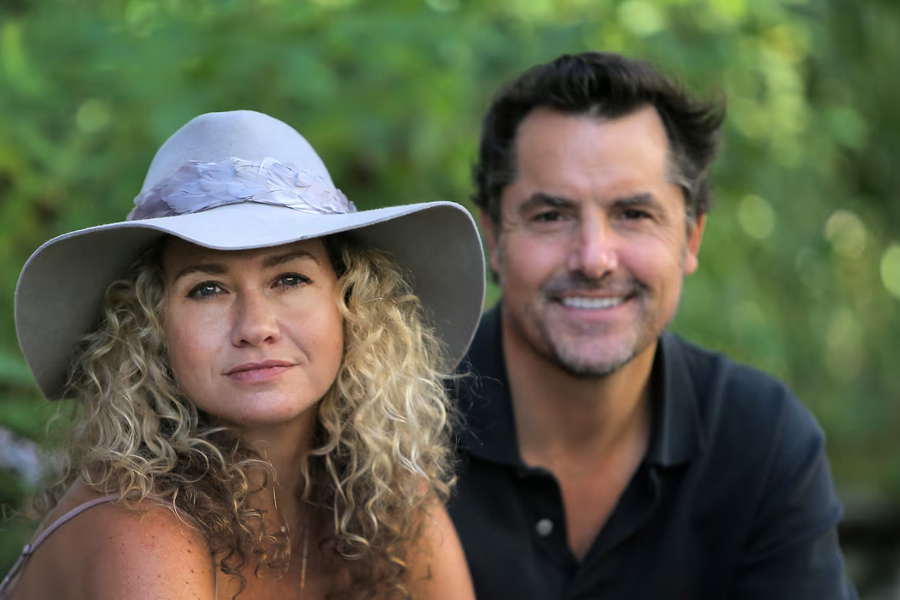
A short portrait of Dean Bragonier
I observed Dean Bragonier turn a concept into a modest movement. He sees learning differences as raw stuff, not flaws. Dean stands out in my work about educators and social entrepreneurs for blending lived experience with rigorous action. He uses his dyslexia to drive a classroom curriculum, teacher training, young ambassadors, and a public voice that promotes dyslexia.
His art isn’t theatrical. It feels like steady masonry—piece by piece, classroom after classroom, teacher by teacher. A stubborn practical imagination drives his work, which first emerged in mid-2010s projects and local campaigns that combined education, community activities, and fundraising.
Family and personal relationships
Family anchors his story. In many ways the personal life and the public mission are braided together. Below I introduce each family member in turn and in some detail, because the family is at the heart of how Dean speaks about purpose.
| Name | Relationship | Notes |
|---|---|---|
| Sarah Maria “Sally” Taylor | Spouse | Singer and educator. Described as a creative partner in home and in public-facing projects. |
| Bodhi Taylor Bragonier | Child | Son; mentioned as a youth ambassador in family narratives around learning differences. |
| James Taylor | In-law | Publicly referenced as family connection through marriage. |
| Carly Simon | In-law | Publicly referenced as family connection through marriage. |
Sarah Maria “Sally” Taylor – spouse
I have written about creative people who build quietly powerful lives outside the glare of celebrity. Sally Taylor fits that pattern: a singer-songwriter and educator who also brings artistic sense to the family conversation about learning. In Dean’s story she is more than a spouse; she is a collaborating voice in shaping how a family understands reading, attention, and creative learning. They parent together and present a unified front when describing how dyslexia can be reframed for young people.
Bodhi Taylor Bragonier – child
Bodhi appears in public accounts as the couple’s child and as someone who has been involved in youth-facing elements of the work. He is a tangible reminder that the project is not abstract. When I imagine family dinners, Bodhi’s presence explains the urgency: policy and pedagogy are not only intellectual projects here, they are about making school life more humane for children like him.
Extended family – in-laws and influences
The family network includes well-known figures referenced in public narratives. Those connections form part of the story because they show how an advocacy project often grows at the intersection of private motivation and public access. In practice that means events, appearances, and an ability to draw attention to classrooms that otherwise go unnoticed.
Career, achievements, and work
Dean builds tools with words. He transitioned from experimental programs to a charity that provides dyslexia-positive curriculum, teacher mentoring, and youth programming in 2014–2015. Early public activities included community fundraisers and a multi-leg swim that blended local spectacle and fundraising. His work garnered national notice in profiles and stories by 2016 and 2017, and pilots expanded to multiple school districts.
Practical achievements include teacher curriculum, school staff trainings, and youth ambassador initiatives that put children at the heart of activism. His advisory community of educators and practitioners helped scale classroom pilots into wider use.
Finance and organizational snapshot
I have reviewed the organizational footprint and public nonprofit listings tied to Dean’s work. The organization is registered and reports typical small-nonprofit dynamics: modest staff, program expenses, and fundraising cycles. Financially the scale is small to mid-size for an education nonprofit operating out of a single regional hub, with documented filings that show revenue and expense lines year by year. Executive leadership has prioritized program investment, teacher training, and curricular development as the main budget items.
Extended timeline of notable events
| Year | Event |
|---|---|
| 2014 | Early formation and pilot programs begin. |
| 2015 | Community fundraising events and a multi-leg awareness swim. |
| 2016 | Wider public profiles and increased media attention. |
| 2017 | Program expansion into additional school pilots and partnerships. |
| 2018-2023 | Continued refinement of curriculum and teacher training; growth in partner schools. |
| 2024 | Ongoing presentations, interviews, and program iterations. |
Numbers matter here: between the founding year and the end of the first three years the work shifted from pilot experiments to repeatable classroom modules. By the time the organization reached year 4 it had a clearer set of curricular materials and a roster of partner classrooms.
Recent mentions and social presence
I track social signals and media notes the way a gardener watches weather: small signs indicate bigger patterns. In recent seasons Dean’s work has surfaced in education podcasts, short video interviews, and social posts showcasing classroom use and youth ambassador activities. School pilot updates, images of workshops, and short clips of students explaining what they have learned appear frequently on organizational channels. The presence is consistent rather than sensational: steady posts, program updates, and occasional event announcements.
FAQ
Who is Dean Bragonier and what is his mission?
I would say he is a founder, advocate, and educator who centers dyslexic strengths. His mission is to reframe learning differences so teachers see students through a lens of capability and strategy rather than deficit.
Who are the main family members in Dean’s life?
His spouse is Sarah Maria “Sally” Taylor and their child is Bodhi Taylor Bragonier. The family narrative also references extended family connections that have appeared in public accounts.
When did the nonprofit work begin?
I track the public timeline back to about 2014 and 2015 for initial pilots and visibility campaigns, with program growth through 2016 and 2017 as media profiles and school pilots increased.
What are the primary programs or offerings?
The core offerings include classroom curriculum units, teacher training workshops, and youth ambassador programs that place students in roles of leadership and peer instruction.
How is the organization funded and administered?
Funding follows a small nonprofit pattern: a mix of donations, events, and grants that support staff, curriculum development, and program delivery. Administrative structure is lean and focused on education program expenditure.
Can I see a quick numerical snapshot?
Yes. Think in small increments: a handful of staff, dozens of partner classrooms in early years, programs running in multiple states, and program budgets that emphasize teacher training and curricular materials rather than large overhead. Numbers have grown incrementally year by year since 2015.
How does the family shape the work?
The family is the engine. Their lived experience with a child who navigates learning differences informs design decisions, testing in classrooms, and the tone of advocacy. Family stories are woven into curriculum examples and public talks.
What is the tone of Dean’s public voice?
Practical, resolute, and quietly persuasive. He uses personal narrative as a tool, not a spectacle, and frames change as incremental but cumulative. In his voice dyslexia is a map, not a barrier.