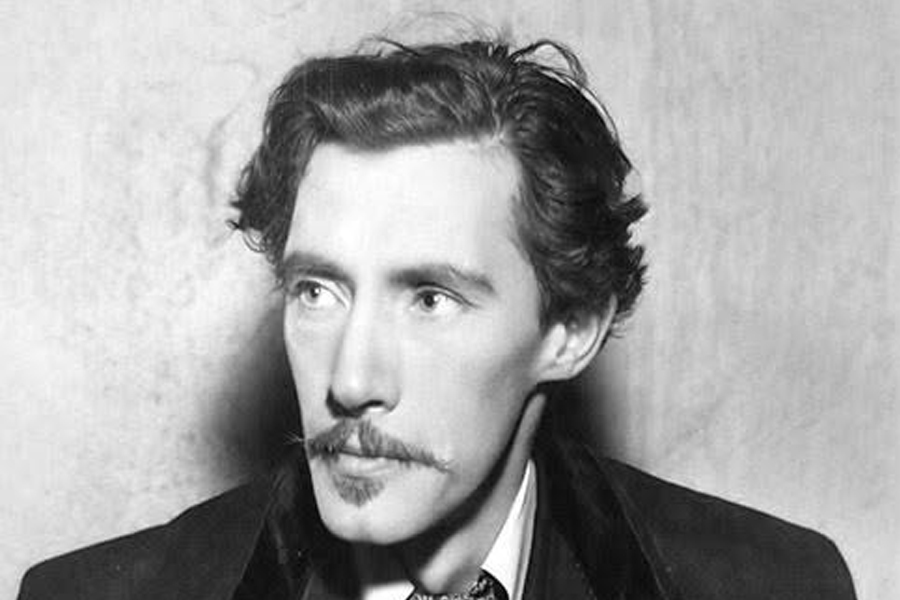
The Man Behind the Carradine Line
When I look at William Reed Carradine, I do not see a celebrity in the modern sense. I see a man standing at the base of a tall family tree, like a root system hidden under soil, doing the work that keeps everything alive above ground. His name survives less through headlines and more through lineage, memory, and the long shadow cast by the family that followed him.
William Reed Carradine was born in the early 1870s, most often placed in 1871, in Georgia. His life bridged two worlds. One was the older, more rooted world of family and faith, shaped by his father, Rev. Beverly Francis Carradine. The other was a fast moving modern world of newspapers, city life, and national communication. William worked as a correspondent for the Associated Press, which suggests a man trained to observe, record, and move information with precision. That is a fitting profession for someone whose own life is now preserved in fragments, clues, and family connections.
He died in 1909 in Manhattan. That date matters because it left his son, John Carradine, to grow up with a father who became more legend than presence. In family histories, absence can be just as powerful as presence. Sometimes a short life leaves a deeper echo than a long one.
A Family Shaped by Faith, Loss, and Movement
William was born into a large and complicated family. His father, Beverly Francis Carradine, was a Methodist minister, evangelist, and author. Beverly was a forceful figure, the kind of man whose convictions probably filled a room before he did. William’s mother was Laura Green Reid, Beverly’s first wife. She died in 1882, which meant William lost his mother while still young.
I think that early loss matters. Family stories often compress pain into a single line, but the reality is harder. A child raised in the late 19th century, especially in a family marked by travel, faith, and change, would have felt instability differently from the way we do now. It would have been sharper, quieter, and more lasting.
William had several full siblings from Beverly and Laura’s marriage. Ernest Carradine died young in 1880. Maude Virginia Carradine Westbrook lived until 1956. Guy Carradine died in 1885. Lula Carradine Samuel lived until 1946. Their lives sketch a family marked by early death, longevity, and divergent paths. Then there were William’s half-siblings from Beverly’s second marriage to Modesta A. M. Burke: Burke Carradine, Victoria Carradine, Glendy Carradine, and Josephine Carradine. Together, these names form a widening circle around William, each one part of the same branching story.
The Carradine family was not static. It moved, adapted, and spread out like water finding new channels. That mobility becomes important later, because it helps explain how the family entered the cultural life of New York and, eventually, American entertainment.
Marriage and the Next Generation
One of William’s most significant life events was his marriage to Genevieve Winifred Richmond Carradine Peck. They married in Manhattan on 3 February 1905. Genevieve stands out. She is a surgeon, unusual for the time. A woman in medicine in the early 1900s needed intelligence, discipline, and stamina to overcome convention.
Their marriage seems like two serious lives meeting. Former journalist William. Her medical background. Some handled language and events, others bodies and healing. Both occupations demand calmness and detail-orientedness. They were briefly together, but John Carradine was their legacy.
John Carradine, born Richmond Reed Carradine in 1906, is the most famous family name. He became a distinctive American film and theater character actor. William spawned an acting dynasty. One of history’s oddest tricks. A individual may be the first stone in a long stone bridge despite living in the background.
William Reed Carradine and His Children
William’s best documented child is John Carradine, and John is the central figure through whom the family story expands. John married and built a family that entered the entertainment world with unusual force. His sons became famous in different ways, and together they turned the Carradine surname into a recognizable cultural brand.
David Carradine became the best known of the group for many years, especially through television and film roles that made him a familiar face to millions. Keith Carradine built a career that combined acting and music, giving the family another creative register. Robert Carradine became known for film and television work that kept him visible across decades. Christopher Carradine and Bruce Carradine are also part of this broad family line, with Bruce often identified through adoption. The full family picture can be messy, but the core pattern is clear: William’s small immediate household opened into a much larger public legacy.
What interests me most is that the family’s public identity rests on a private chain. William worked in journalism. His son entered acting. His grandchildren turned that into a multigenerational presence. The line feels almost architectural. One generation lays foundation. The next raises walls. The next opens windows.
Career, Reputation, and Hidden Work
William Reed Carradine appeared to have left few honors or noteworthy publications. That doesn’t limit his life. It hinders tracking. Many significant lives are only partially visible now, especially those of persons who valued work over popularity.
His Associated Press correspondent job emphasizes discipline and speed. The journalism at the time was serious. It needed judgment and steadiness. Weighty news. Every message went farther than the writer. That represents William’s legacy well. He spread more than news. A legacy of individuality, temperament, and talent continued after his death.
The Family Legacy After William
Once John Carradine entered the picture, the family became a public story. John’s sons and descendants extended the Carradine name into film, television, and cultural memory. The family tree from William outward resembles a river delta. One narrow channel becomes many, and each branch carries the same source water in a different direction.
Beverly Carradine, William’s father, anchors the older spiritual side of the family. Laura Green Reid anchors the maternal line that gave William his earliest home. Genevieve Winifred Richmond Carradine Peck represents the bridge into a modern, educated, professional world. John represents transformation. Then David, Keith, Robert, Christopher, and Bruce carry the name into the twentieth century and beyond.
I do not see William as a forgotten man. I see him as a quiet hinge in a family story that keeps swinging open. The records may be incomplete, but the pattern is vivid. He lived in a time of hard boundaries and changing possibilities. He had roots in ministry, links to journalism, and a family that later became woven into American screen culture. That is not a minor legacy. It is a lineage with gravity.
FAQ
Who was William Reed Carradine?
William Reed Carradine was an American journalist and family patriarch best known today as the father of actor John Carradine and the ancestor of a famous acting family. He was born in Georgia in the early 1870s and died in Manhattan in 1909.
Who were William Reed Carradine’s parents?
His parents were Rev. Beverly Francis Carradine and Laura Green Reid. His father was a Methodist minister, evangelist, and author, while his mother died in 1882.
Did William Reed Carradine have siblings?
Yes. His full siblings included Ernest Carradine, Maude Virginia Carradine Westbrook, Guy Carradine, and Lula Carradine Samuel. He also had half-siblings from his father’s second marriage, including Burke Carradine, Victoria Carradine, Glendy Carradine, and Josephine Carradine.
Who was William Reed Carradine’s spouse?
He married Genevieve Winifred Richmond Carradine in Manhattan on 3 February 1905. She later became Genevieve Winifred Richmond Carradine Peck after remarrying.
Who was William Reed Carradine’s child?
His best documented child was John Carradine, born Richmond Reed Carradine in 1906. John later became a major American actor and the father of several well known performers.
Why is William Reed Carradine remembered today?
He is remembered because he stands at the beginning of the Carradine acting dynasty. His life links the family’s older ministerial and journalistic roots to the public careers that came later.